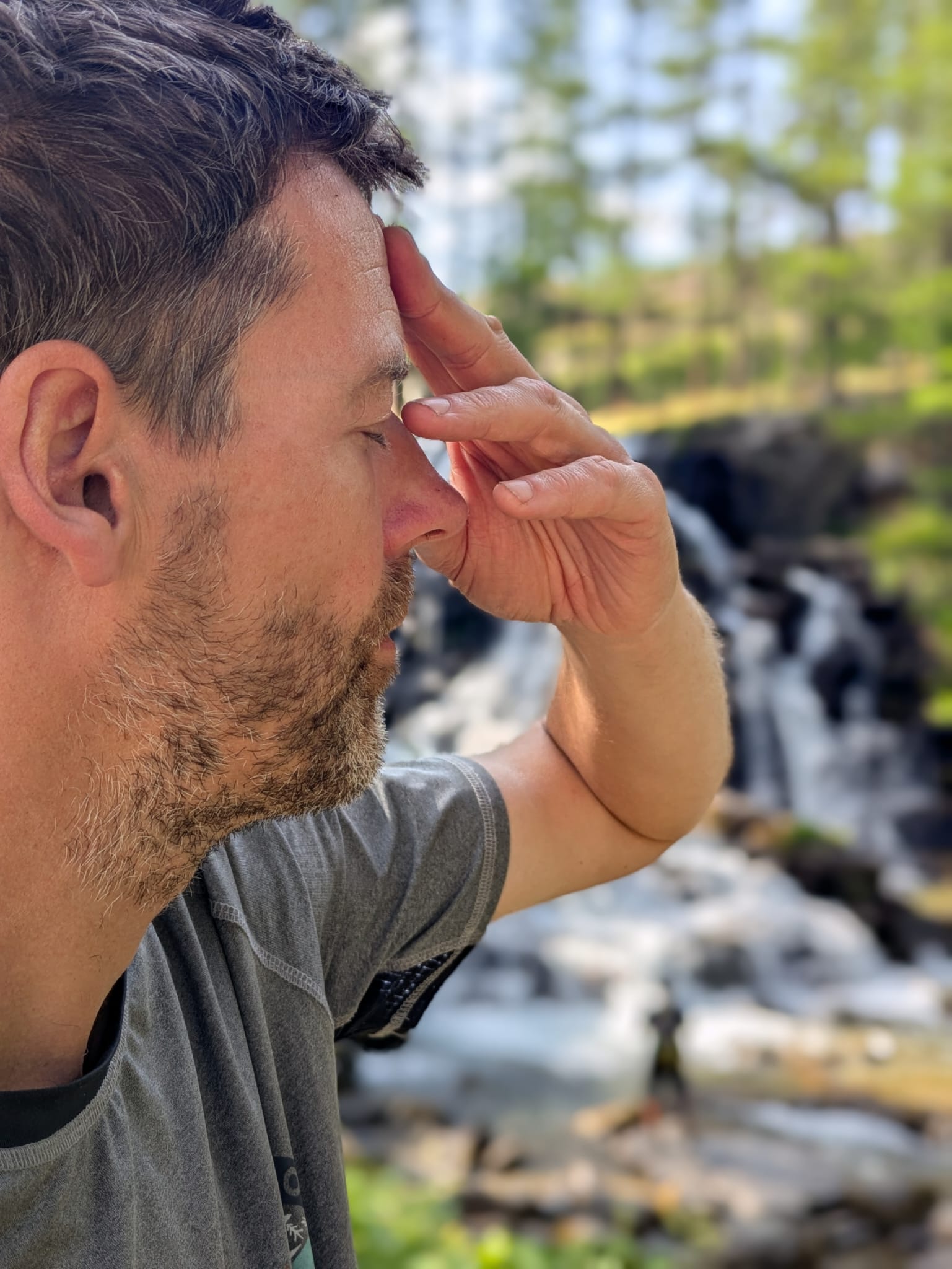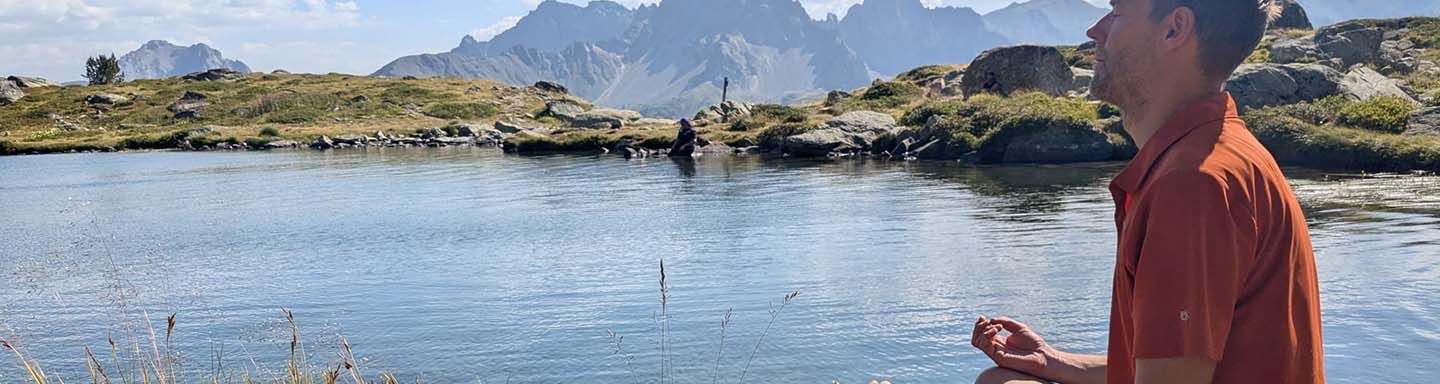
Matt Bromley was fit, active, and busy with family and work when he became seriously ill in the early months of the pandemic. In this conversation with Eve, he shares his experience of Long COVID, the uncertainty of those early days, and the mind-body approaches that helped him find his way back to health.
Eve:
Hi, Matt.
Matt:
Hi, Eve.
Eve:
Thank you so much for doing this. I always get really excited when I meet somebody else who's gone through a similar journey. I’m really looking forward to hearing all about yours. If you could start by telling us a little bit about you and who you are outside of your recovery.
Matt:
I’m Matt. I’ve got three children and we live in South Manchester. I teach for a job, which is what I was doing before I got ill. I’ve always been fit and active and I love the outdoors. I love being in nature and love the sea and the mountains equally. We’re a really active family. We’ve got a camper van and we spend as much time away in it as possible. We live a fairly simple life.
Getting ill
Eve:
Can you tell us a little bit more about what happened? When did you get ill?
Matt:
I turned 40 in March 2020 and got very ill just before Easter. I was working in a school right at the start of the pandemic. There were coughs going around and lockdown was clearly coming. A week later we went into lockdown and I started teaching online.
I noticed I was becoming very short of breath while walking. I’d never been ill for more than a week in my life, so I assumed it would pass. Instead, it got worse. By Easter Sunday 2020, I couldn’t get up the stairs. I had crushing chest pain, awful headaches, fatigue, and breathlessness.
I went through NHS 111 and was told to stay at home. I remember my only aim was to make it to my son’s birthday the following week because I felt terrified. After a couple of trips to A&E, tests came back mostly normal, although inflammation was detected, and I was sent home.
That first month was acute. I couldn’t do anything. I couldn’t get out of bed or watch TV. When I tried to push myself, it made everything worse and led to big relapses. My wife was working on critical care COVID wards, and we had two young children at home. It was desperate.
This went on for about three or four months. There were no answers. I was signed off work because I couldn’t even open a laptop. By August, it was clear I wasn’t recovering. I spent that month lying flat at my mum’s house, either in bed or in the garden. I felt like a 95 year old.
Finding support
Matt:
Online communities started forming. Some were very negative, but I joined one call with Susie Bolt and started connecting with people going through the same thing. That really helped. People began sharing information about pacing and what helped.
I tracked my days, which were often one out of ten. I’d get a bit of hope, try something, then relapse for weeks.
Turning to mind body approaches
Eve:
What made you start looking into mind body approaches?
Matt:
By September, I knew I wasn’t going back to work. I remembered Alex Howard from school, who runs the Optimal Health Clinic. I messaged him at three in the morning out of desperation. He gave me access to one of his courses.
That, combined with Susie’s Zoom calls, helped me come back into my body. I learned how to rest properly, how to meditate, and how to surrender to where I was. That acceptance became a stable place to start from.
Learning to rest
Eve:
We often think we’re resting, but our bodies are still holding tension.
Matt:
Absolutely. Before all this, rest meant running, climbing, or competitive sailing. I’d never meditated before. It was a whole new world.
Eve:
Were you sceptical at first?
Matt:
No. I was in such a dark place that I didn’t really have any other options. I couldn’t watch TV or listen to podcasts. Meditation was all I could do, and it became a real blessing.
What helped most
Eve:
What had the biggest impact on your recovery?
Matt:
Alex’s programme helped me understand things like polyvagal theory and personality patterns. That foundation really mattered.
Community mattered too. I left the big Facebook groups and formed a small WhatsApp group of four of us. We met once a week for 20 minutes on Zoom. It was supportive and positive, and that helped enormously.
Progress and turning points
Eve:
When did you notice things starting to shift?
Matt:
By Christmas 2020, I decided to focus fully on stabilising. By January, my days were around three or four out of ten, but they were more consistent.
One evening, I decided to drive to Tesco for milk. It was the first time I’d driven in ten months. It was exhausting, but I did it. That felt like a real turning point.
A friend then did the Lightning Process and recovered very quickly. I decided to do it too. I couldn’t afford not to. Being ill is expensive.